
solitaire variants guide is the kind of puzzle topic that works best when it starts with a real scene, not a textbook definition. A player opens the page, sees a familiar game, and wants one useful reason to keep reading before the next move.
On Bliss Solitaire, that reason should stay close to solitaire. The article can give the reader a little story, a little context, and then a practical way to play better today.
If you want to try the game while reading, start from the Bliss Solitaire main page. For a wider daily puzzle shelf, use Easy Daily Puzzle or browse more solitaire games on Easy Daily Puzzle.
solitaire variants guide: how rules and variants change play
Classic Klondike uses tableau piles, a stock, a waste pile, and foundations. Draw-one and draw-three change how often a useful card becomes available. That is why solitaire variants guide should begin with plain rules before it talks about harder versions.
Variants are useful because they expose the shape of the original game. Change one rule, and players suddenly notice which old habits were doing the real work.
The story behind solitaire variants guide
The rules angle works because beginners need clarity and returning players need variety. The first half of the game teaches the promise. The variants teach where that promise can stretch.
For outside context, Bicycle Cards Solitaire rules and David Parlett on patience games are good starting points. They keep the article grounded without forcing the reader through a dry reference list.
How solitaire variants guide changes the next round
Picture a Klondike deal where the foundation is ready for a card but the tableau is still hiding half its story. solitaire variants guide says to wait long enough to ask whether that tidy move removes a card you may need below.
Solitaire is full of moves that are correct but too early. The better player is not slower forever. They simply keep more options alive until the board gives a reason.
This is where the topic becomes practical. solitaire variants guide should help the reader make one better decision: pause before a guess, sort before dragging, check a clue before writing, or protect space before making a tidy card move.
Simple habits to use with solitaire variants guide
- Uncover tableau cards before rushing cards to the foundation.
- Save empty spaces for kings that open the most hidden cards.
- In draw-three games, remember the waste pile order.
- Review one bad move before restarting a lost deal.
What beginners usually miss about solitaire variants guide
Beginners usually miss order. They learn the rules quickly, then assume every legal move is equally useful. That is almost never true. A move can be legal and still make the next part harder.
The better habit is to ask what the move opens. Does it reveal a card, create a crossing, confirm a number, isolate a color group, or make the board easier to read? If yes, the move has earned its place.
Why solitaire variants guide still fits online play
Online play changes the pace. It removes setup, saves the table, restarts quickly, and makes a short break feel complete. That convenience is why solitaire keeps finding new readers and players.
The risk is speed. When a game is one click away, the player can start treating it like a blur. solitaire variants guide is a small brake. It gives the next move a reason.
Where a picture helps explain solitaire variants guide
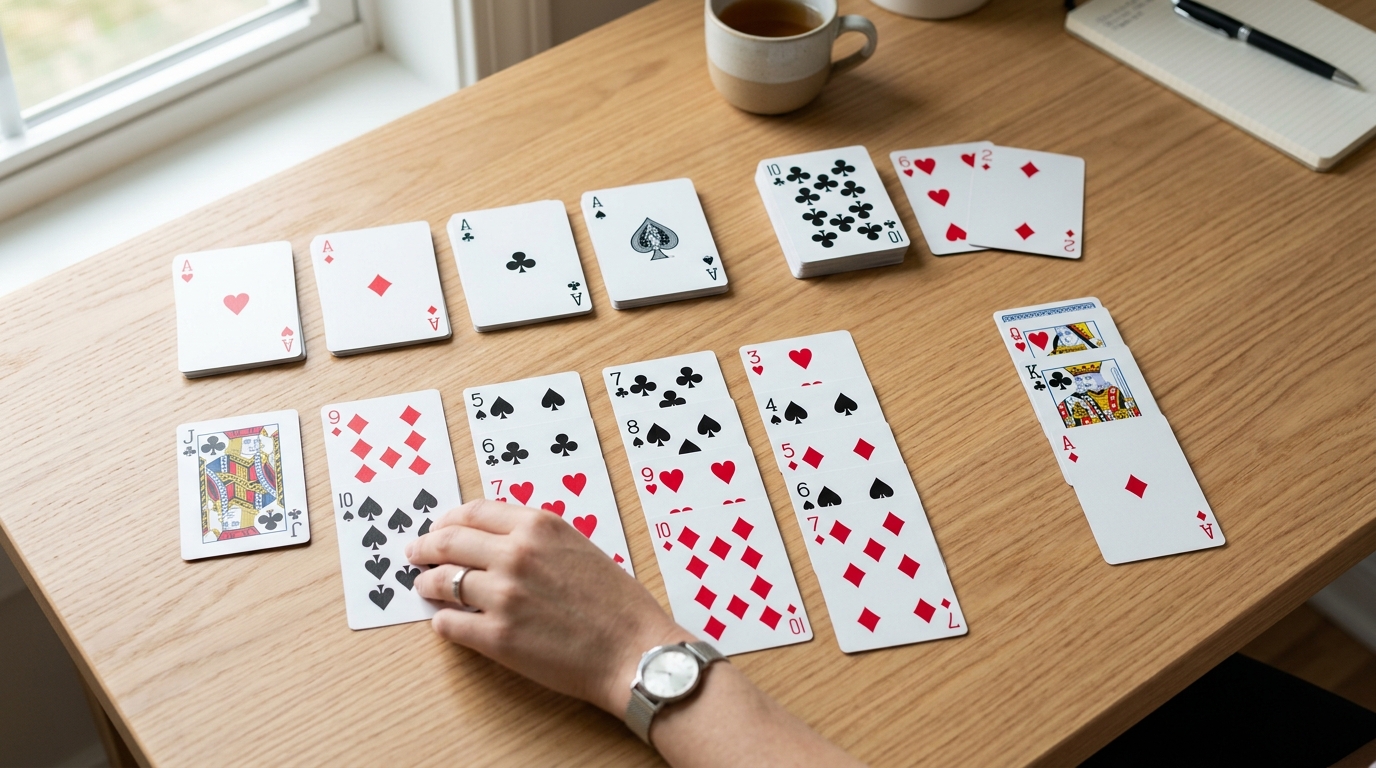
This is also the kind of topic that benefits from a real illustration. A grid, table, card layout, puzzle box, or tournament room gives the reader a quick visual anchor before the advice begins. The image does not need to explain everything. It only needs to make the page feel like a playable puzzle space rather than a block of instructions.
For Bliss Solitaire, the best image is simple: one clear puzzle scene, no clutter, no brand confusion, and alt text that includes solitaire variants guide. That helps the article feel more complete for readers and keeps the WordPress post aligned with Rank Math’s image checks.
Try one round with that brake in mind. Do not chase every advanced trick. Use one rule for the whole session: choose the move that makes the board easier to understand. That single filter is enough for a casual player to feel progress.
A good next step after solitaire variants guide
The clean next step is to play, not to collect more theory. Open Bliss Solitaire, give the game one focused round, and notice where the advice actually helps.
When you want a change of pace, return to the Easy Daily Puzzle game library. Switching from numbers to words, pieces, or cards can keep the puzzle habit fresh without making it feel like work.
The reason solitaire variants guide is worth a whole post is simple. It gives the reader a story to remember and a move to try. That is enough for a better puzzle session.