
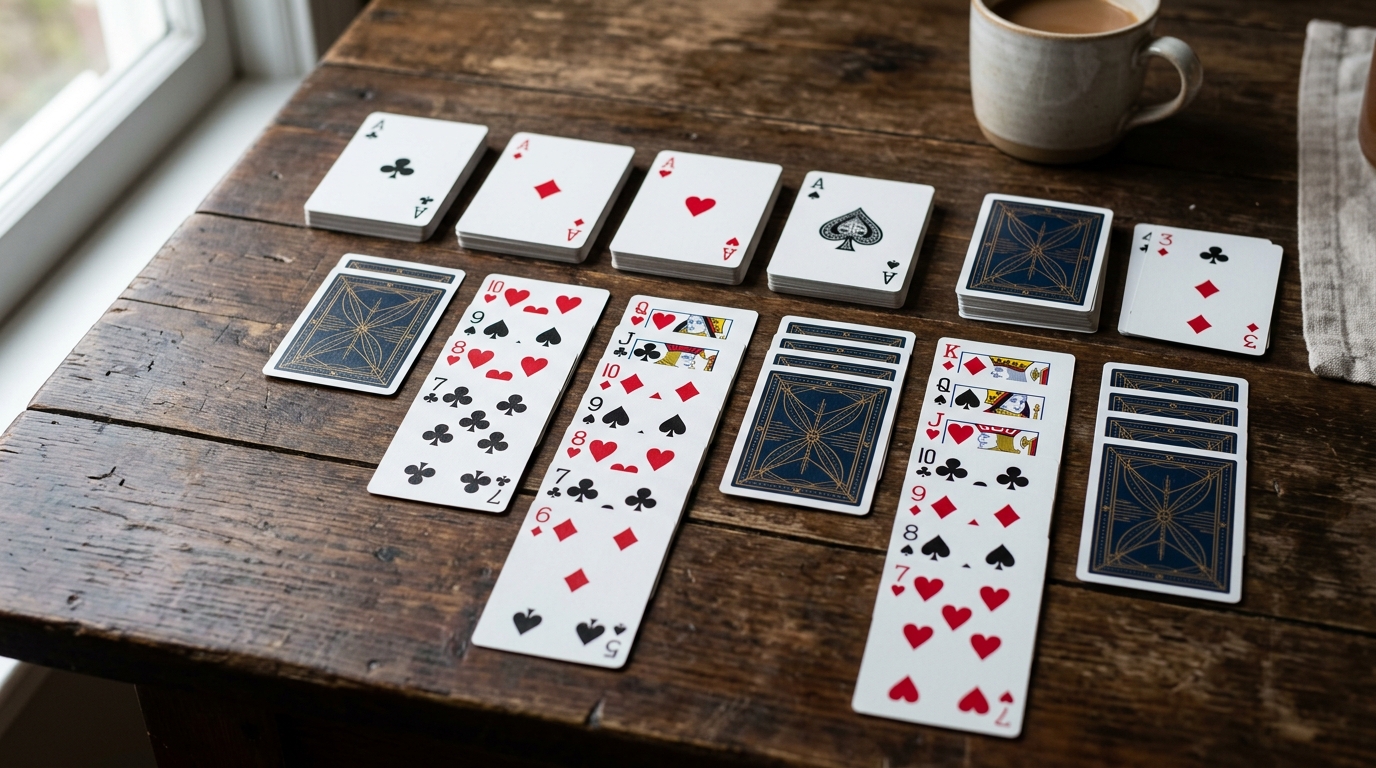
Bliss Solitaire can look casual until a player starts watching the clock. Scores and streaks add pressure, but the best sessions still depend on choosing the right move before chasing the number. Competition does not have to mean a giant stadium or a prize table. It can be a clean time, a better score, a longer streak, or the simple challenge of making fewer weak moves than yesterday. That is the useful side of competitive puzzle play: it turns attention into something a player can measure without losing the calm that made the game appealing.
Bliss Solitaire in practice
The competition is often with your last score
Solitaire does not need an opponent to create pressure. A timer, a score, a streak, or a difficult daily challenge can make a familiar board feel surprisingly sharp. Microsoft has even used Solitaire challenges and tournaments to turn private play into a shared event. The important shift is psychological: the player starts choosing moves not only to survive, but to preserve a better result.
That can improve attention if the score remains a guide rather than a threat. A fast move that closes the tableau is not valuable just because it saves a second. A slower move that exposes a hidden card may create a better board and a better finish.
What score-chasing teaches
A useful review asks which choice changed the board’s flexibility. Did you move a card home too early? Did you miss a face-down reveal? Did you cycle the stock without remembering the useful card underneath? Those questions produce more learning than simply replaying until the number improves.
The best competitive habit is therefore selective restraint. Keep the board open, protect options, and let the score follow from better sequencing.
Turn the next deal into a fair test
Start a Solitaire challenge on the main site and browse more Solitaire strategy here. Microsoft’s Solitaire history provides useful context for digital challenges, and Britannica explains the broader patience tradition.
A fair challenge for an ordinary session
Before moving a card, read the tableau as a set of future spaces. A face-down card that can be exposed, a column that can be emptied, or a sequence that can receive several ranks is usually more valuable than a move that only makes the layout look tidy. The best legal move is often the one that leaves the most useful next move.
Keep the waste pile and foundations in view. In draw-three play, remember which useful card sits below the visible one when possible. In every mode, check whether sending a low card home removes a color or rank needed in the tableau. A foundation is safe storage, but the tableau is where the board changes.
When a deal fails, review the first decision that closed a lane or buried a useful card. Do not only replay the final few moves. The late problem is often the result of an early convenience move that looked harmless at the time. A short review makes the next deal feel less like luck and more like a sequence you can read.
For a calm daily test, start a Solitaire game on Easy Daily Puzzle and browse more Solitaire tips on this site. Set one goal for the session: expose more hidden cards, preserve a column, or delay one foundation move. A narrow goal keeps the game useful without turning it into a chore.
The small detail worth remembering
The most useful Solitaire habit is to separate movement from progress. A card can move without improving the position. Look for reveals, usable spaces, and sequences that keep options open. That simple filter makes familiar deals feel more deliberate.
A daily card game does not need a perfect win rate to be worthwhile. If the board helps you notice timing, order, and the cost of a convenient move, the session has already given you something to use on the next deal.
When in doubt, prefer the move that keeps more cards available. A tidy foundation is satisfying, but an open tableau usually gives the next decision more room.
For a little more context, read Microsoft Solitaire history and Patience card game overview. These references are useful for checking the basic history or rules without turning a daily game post into a long reference list.