
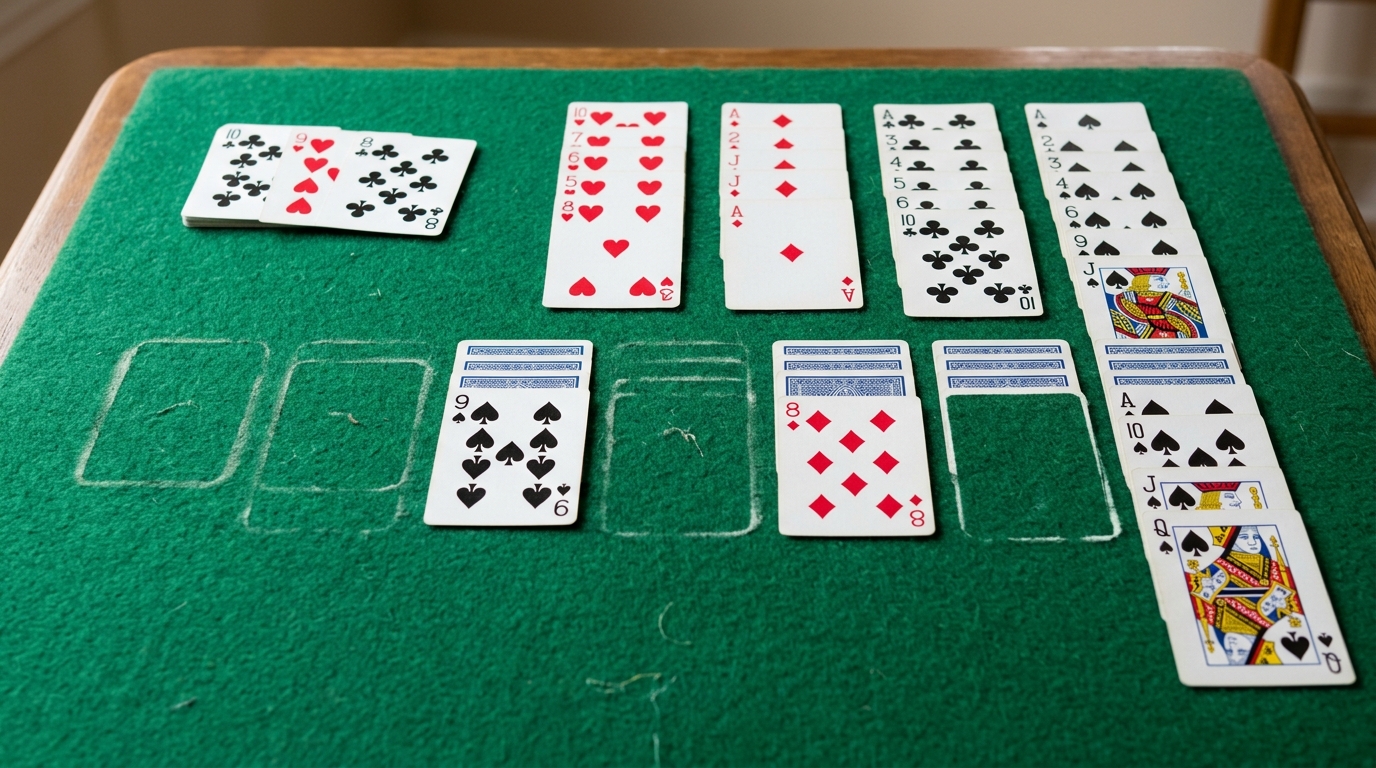
Draw One and Draw Three can use the same tableau, yet they ask for different kinds of attention. One gives information freely. The other makes position part of the puzzle. Solitaire draw one draw three choice gives that moment a name, but the useful part is the habit behind it. The aim is not to make every move look clever. It is to make the next move easier to explain.
Why Solitaire draw one draw three choice matters on an ordinary puzzle
Solitaire draw one draw three choice is a rules decision before it becomes a strategy decision. Draw One exposes the next stock card directly, while Draw Three exposes cards in groups and makes waste-pile order more important. Neither mode is simply the correct version for every player or every break. A player does not need a special setup to use this idea. It works during a short browser session, on a printed page, or in the middle of a game when attention is starting to drift.
Klondike Solitaire rewards players who read the tableau as a set of doors. Some cards open a face-down card, some create a lane, some free a low card, and some only make the piles look nicer. The stock can help, but it can also hide the card you need behind a less useful one. A calm player does not reject progress; they ask whether the progress improves access. That small distinction is what turns a legal move into a well-timed move.
The wider background is worth keeping nearby. Bicycle Solitaire rules offers useful context for this puzzle family, while Parlett patience history gives a second view of its rules or history. The sources differ in purpose, but both support the same practical lesson: a clear structure gives the player something reliable to inspect.
How to use Solitaire draw one draw three choice without forcing it
Choose Draw One when you want to practise tableau planning, foundation timing, or a calm short session. Choose Draw Three when you want to practise stock memory, reversible choices, and the value of changing the tableau before cycling. Keep the goal consistent while comparing the two modes. Start with a legal move and let the evidence narrow the field. If the position does not improve, stop. A good technique is a filter, not a command to keep pushing the same idea after the board has moved on.
A short routine for the next game
Play one deal in each mode with the same opening scan. Note where the first stall appears, what the waste pile is hiding, and whether the tableau or stock caused the harder decision. That comparison is more useful than a win claim.
- Choose the mode before dealing.
- Name the skill you want to practise.
- Read the stock order in Draw Three.
- Compare the first stall after the session.
The mistake that makes this idea feel harder
The trap is switching modes and judging the new one by the old mode’s speed. Another mistake is calling Draw Three random because the next card is temporarily covered. The stock is not only a source of cards; it is an order to read.
What to remember when the board changes
Solitaire draw one draw three choice lets you tune the game to your attention. Pick the mode that makes the next decision interesting rather than the mode that promises the quickest finish. That is also why Solitaire draw one draw three choice should stay practical. Use it when it describes the board in front of you, then return to ordinary reading when the evidence changes. A puzzle is allowed to ask a different question on the next move.
If Solitaire draw one draw three choice does not produce a move today, that is useful information too. Leave the position clean, keep the strongest clue visible, and come back after one ordinary move. Techniques become reliable through that small return: notice the signal, test it, record what changed, and stop before the idea turns into a guess. Over time, the pause becomes part of your solving rhythm rather than a sign that the puzzle has defeated you.
Keep the session concrete. Name the clue, make one reversible change, and look again. That is enough for a useful practice round, even when the puzzle is unfinished. A short note about what changed makes the next session easier to start.
For a live session, play more puzzles on bliss-solitaire.com. When you want a related example, browse related posts on this site. You can also try another daily puzzle at Easy Daily Puzzle or find more puzzle guides on Easy Daily Puzzle. Keep the next step simple: play one puzzle, try the routine once, and notice which decision became clearer.
A Solitaire deal is easier to revisit when the last move had a reason. Remember the hidden card, lane, or stock position you were protecting, then continue from that point instead of replaying the whole board emotionally.